
Acne Scar Treatment in Bangkok
Smooth pitted scars and fade marks with microneedling, lasers, and fillers.

Acne can leave four different kinds of marks behind: red marks, brown marks, pitted scars, and raised bumps. Each one needs a different treatment, and most people have more than one type.
We treat the full range:
- Red and brown marks: vascular and pigment-targeting lasers
- Pitted texture: resurfacing lasers, RF microneedling, subcision
- Volume loss: dermal fillers and biostimulators
- Raised scars: corticosteroid injections
Our dermatologists assess your scar mix and design a plan matched to your skin.
Types of Acne Scars
Around half of people with acne develop some form of scarring, and most have more than one type.
Identifying your mix is the first step toward matching the right treatment.
Red Marks (PIE)

Before
After -
Before
After
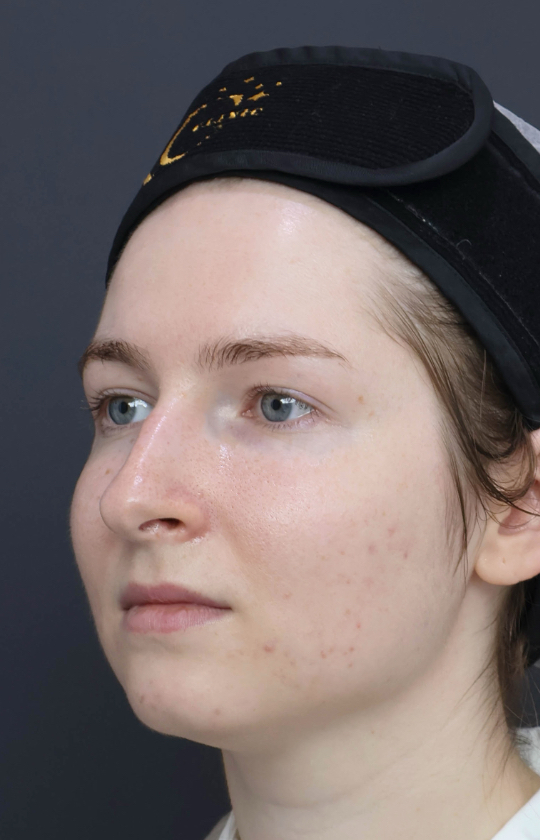
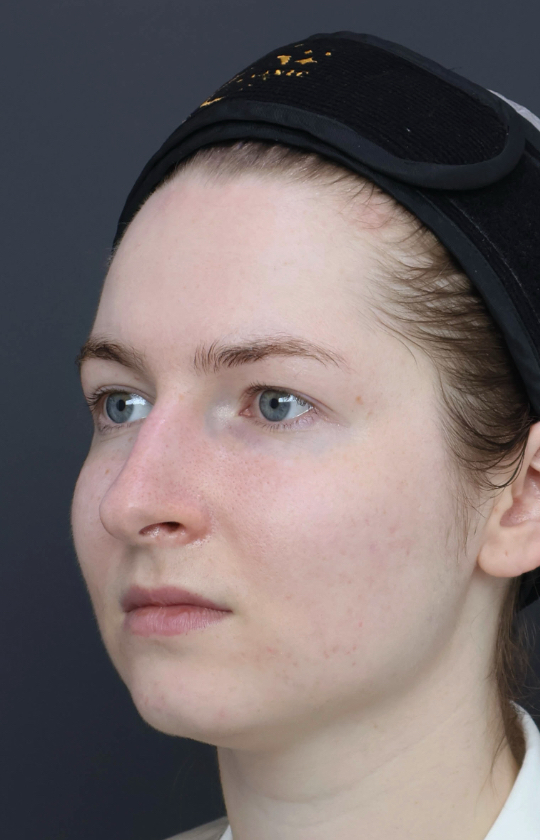


Results may vary with each individual
Pink, red, or purple flat marks left after a breakout heals. Technically not scars, just discoloration from blood vessels still recovering from the inflammation. Common on lighter skin (Fitzpatrick I to III).
Red marks fade slowly on their own over many months. Vascular-targeting laser treatments speed the process by precisely targeting the underlying blood vessels: Dual Yellow Laser, Blink, or IPL, chosen based on your skin tone.
Brown Marks (PIH)
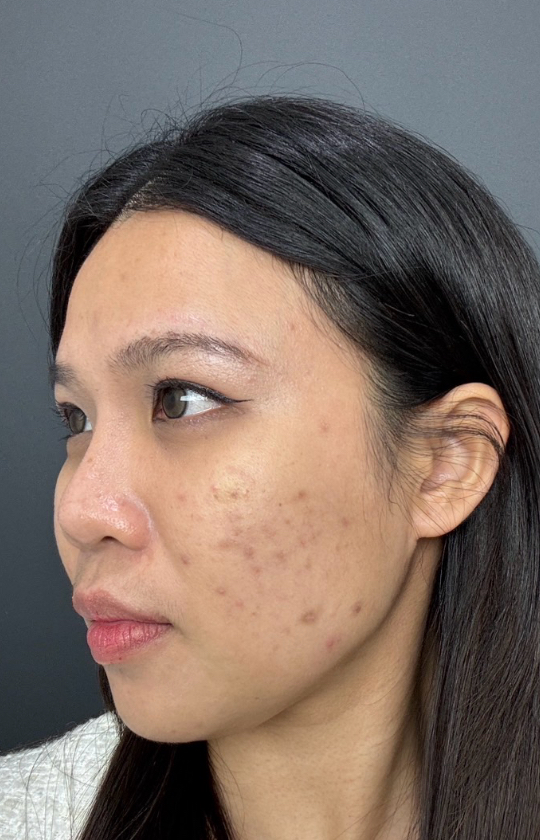
Before 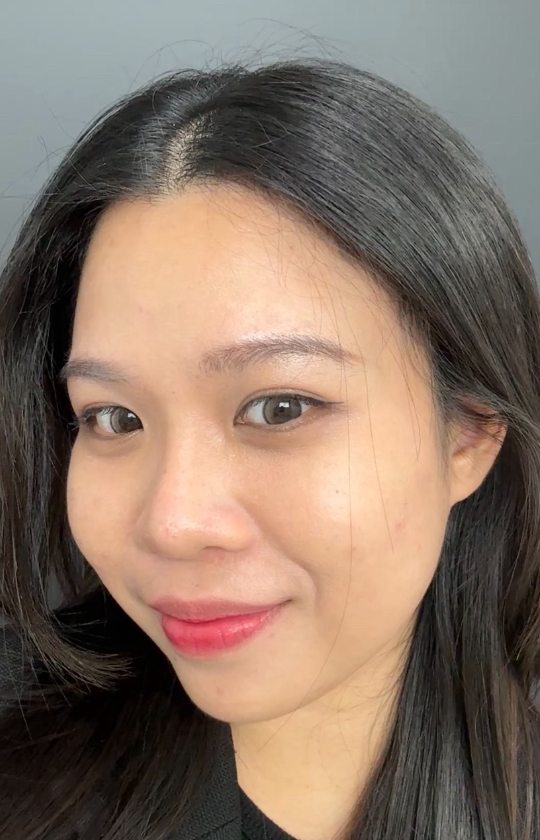
After -
Before
After


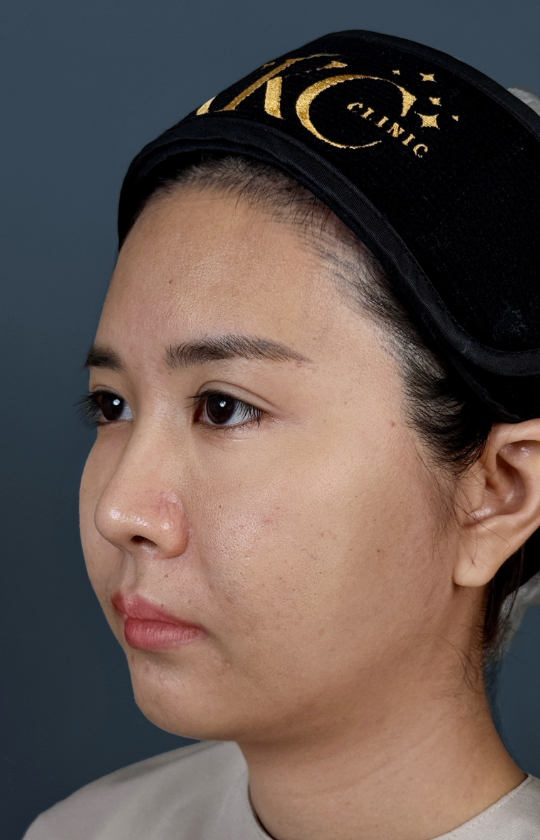
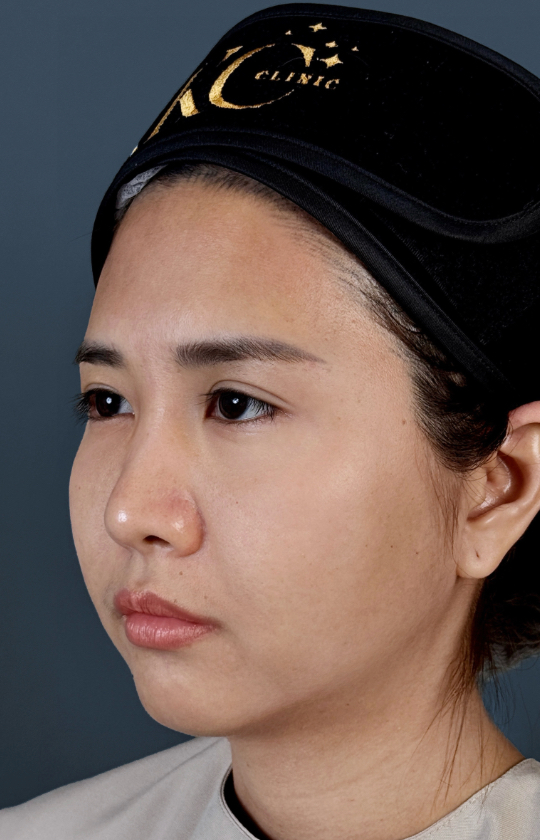
Results may vary with each individual
Tan to dark brown patches where acne was inflamed. Not technically a scar either; it’s pigment the skin produced during inflammation. Common on darker skin (Fitzpatrick III to VI).
PIH typically resolves on its own in 3 to 12 months, longer in darker skin or with continued sun exposure. Pigment-targeting lasers (IPL, Blink, and the green wavelength of Dual Yellow) can speed fading.
In darker skin (Fitzpatrick IV to VI), we usually recommend topical lightening agents first and use energy devices conservatively to reduce the risk of making pigmentation worse.
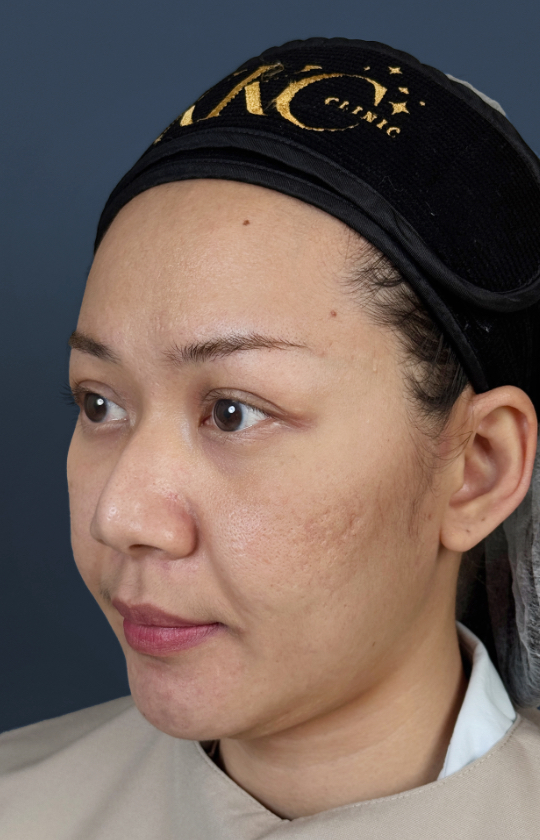
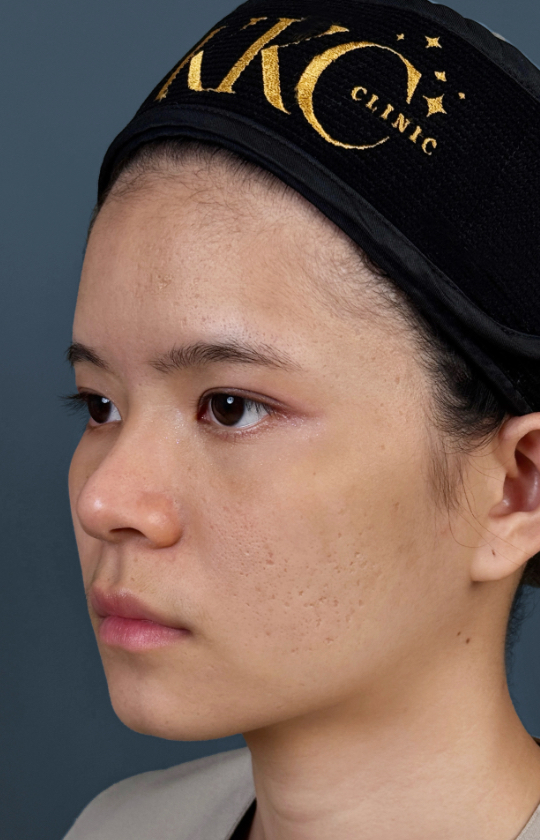
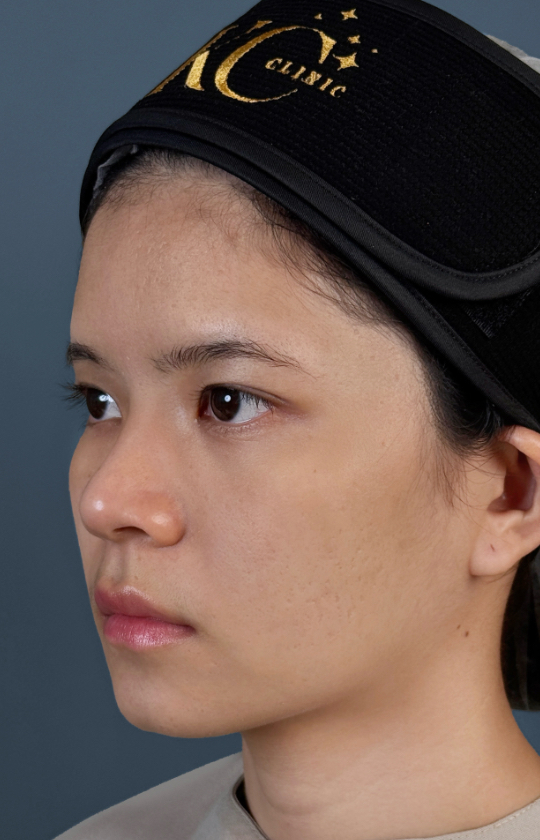
Pitted Scars (Atrophic)
Before 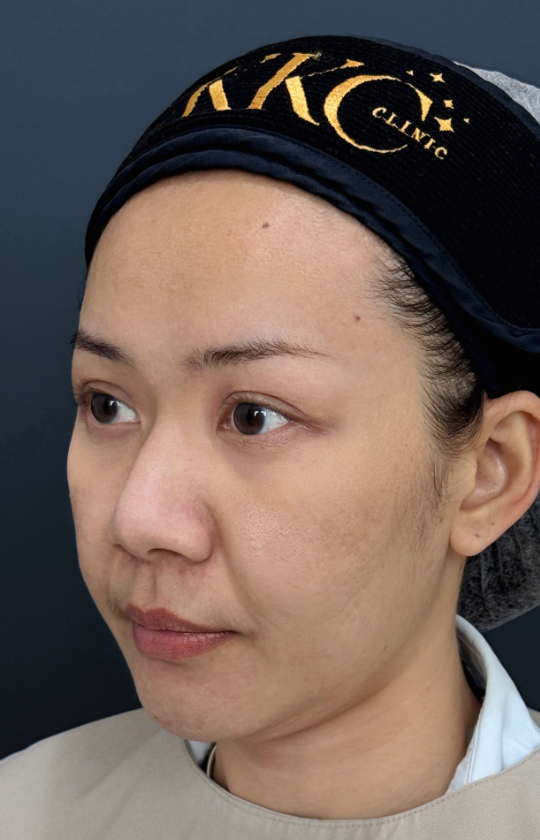
After -
Before
After -
Before
After


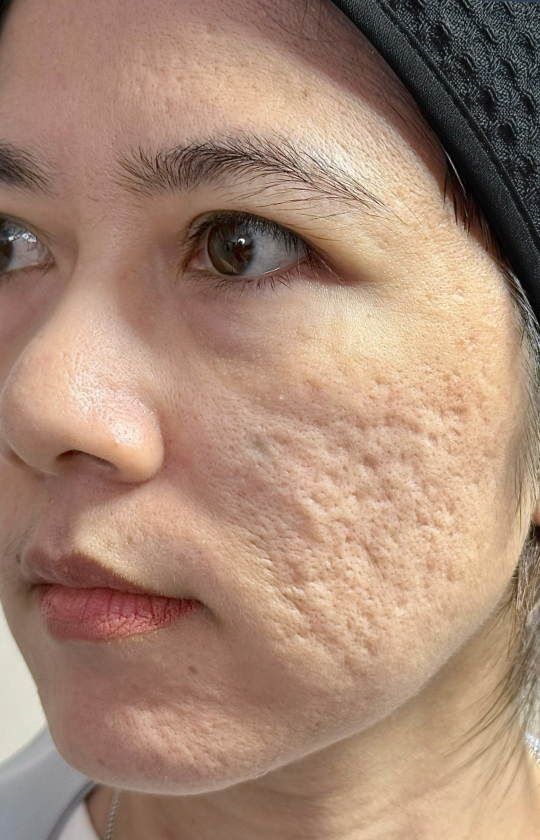
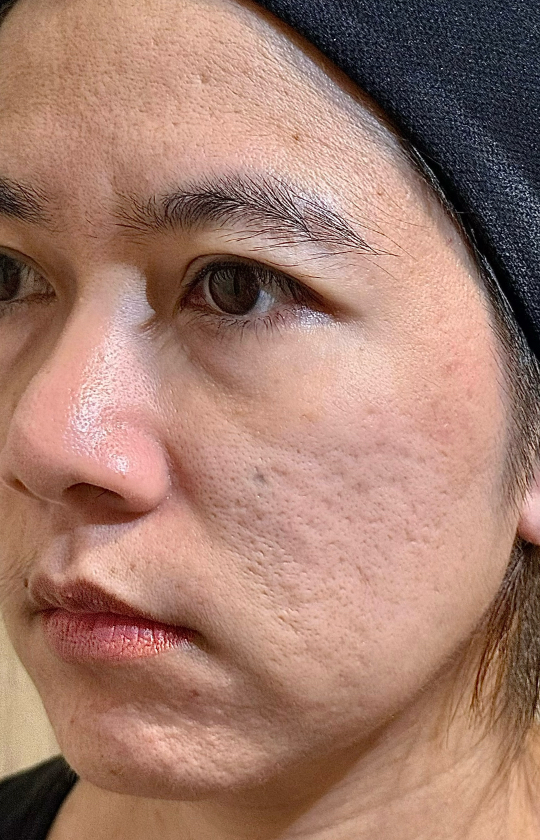
Results may vary with each individual
Depressed scars where collagen was lost during healing. These are what most people picture when they think of acne scarring, and they don’t fade on their own. Three sub-types:
- Ice pick: narrow V-shaped pits up to 2 mm wide.
- Boxcar: oval or round depressions with sharp edges.
- Rolling: wide, shallow undulations from tethered fibers beneath the skin, up to 5 mm across.
Each sub-type calls for a different mix of treatments. We cover the full range below.
Raised Scars (Hypertrophic and Keloid)
Raised scars sit above the surrounding skin, formed when healing lays down too much collagen. That makes them the opposite of pitted scars, which come from collagen loss. There are two kinds: hypertrophic scars stay within the original area, and keloids grow beyond it.
Because the problem is too much collagen, raised scars need the opposite approach. We treat them with Kenacort, a corticosteroid injected into the scar. It calms inflammation, slows new collagen buildup, and helps the body break down the excess collagen that keeps the scar raised.
Raised scars usually take a series of injections, spaced a few weeks apart, with the scar flattening gradually. Hypertrophic scars often respond well. Results vary from person to person, and not every scar responds the same way.
Keloids are more stubborn. They often need ongoing touch-ups, and your doctor may pair the injections with other treatments.
Your doctor will examine the scar and map out the plan, including how many sessions and the cost, at your free consultation.
How We Treat Acne Scars
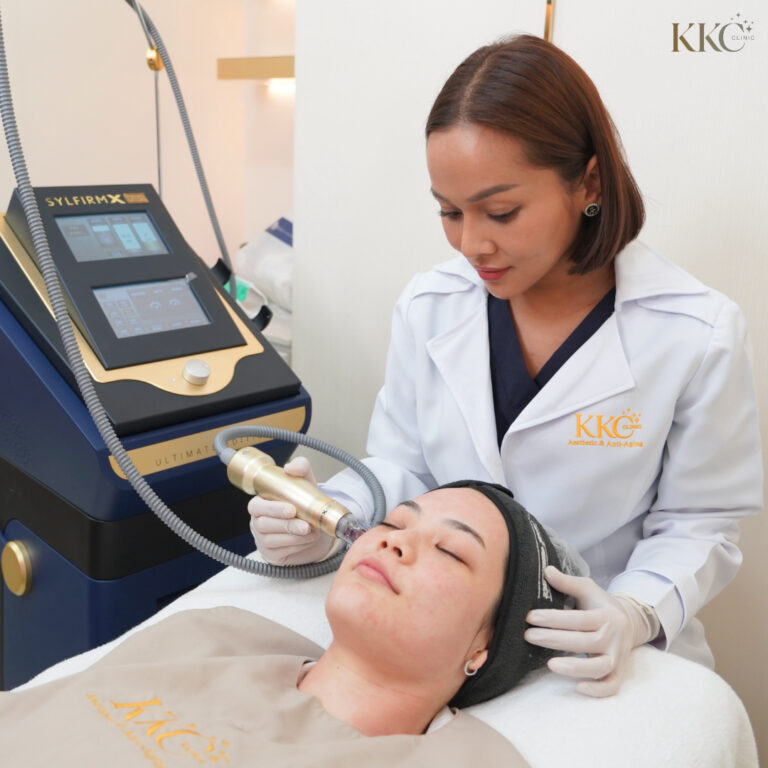
Most people have a mix of scar types: a few rolling scars, some boxcar texture, lingering brown marks. A single modality rarely addresses all of them efficiently.
We design plans that combine treatments matched to your specific pattern. Combination approaches often deliver better results than any single treatment alone.
Your plan is built around your mix of scar types, your skin type, your downtime tolerance, and your goals.
Common pairings we use:
- Subcision plus filler or biostimulator in the same session: release the tether, refill the volume
- CO2 laser plus RF microneedling at staggered intervals: surface remodel and deeper collagen induction
- Vascular laser (Dual Yellow, Blink, IPL) plus atrophic treatment: for mixed PIE/PIH and pitted texture
- In-clinic treatment plus at-home maintenance
Pricing at a Glance
| Treatment | Best for | Starting from |
|---|---|---|
| Subcision | Rolling, tethered atrophic scars | ฿3,000 |
| Dual Yellow Laser | Red marks (PIE) | ฿4,000 |
| Blink Laser | Brown marks (PIH) | ฿3,750 |
| IPL | Mixed PIE + PIH, early scars | ฿4,000 |
| CO2 Laser | Deep ice pick, severe atrophic | ฿4,500 |
| RF Microneedling | Boxcar, rolling, deeper textures (preferred for darker skin) | ฿9,990 |
| Skin Boosters / Biostimulators | Long-term collagen rebuild | ฿12,000 |
| Dermal Fillers (HA) | Volume restoration after subcision | ฿15,000 |
| Kenacort Injections | Raised scars (hypertrophic and keloid) | ฿2,000 |
Most plans combine modalities. We provide a detailed plan and full pricing at your free consultation.
Are the Results Permanent?
Most acne scar treatments work by stimulating your skin to build new collagen. Once that collagen forms, it becomes part of your skin’s structure, so results tend to be durable. Some scars, especially tethered ones, can benefit from occasional maintenance touch-ups.
Complete erasure isn’t something any current treatment can reliably promise. The realistic goal is meaningful, lasting improvement, not perfect skin.
Most people see roughly 50% reduction in scar appearance with a personalized plan, and some see more.
The picture is different for the four kinds of marks acne can leave behind:
- Red marks (PIE) and brown marks (PIH) fade naturally on their own, typically over 3 to 12 months. Treatment in clinic speeds the process significantly, but the marks would eventually go even without intervention.
- Pitted scars (atrophic) don’t fade on their own. They need professional treatment to see meaningful improvement. Once we rebuild collagen in the depressed area, that new collagen is part of your skin.
- Raised scars (hypertrophic and keloid) are flattened with corticosteroid injections; results vary by scar type and may need touch-ups over time.
Treating sooner produces better results than treating older established scars. If you’ve recently finished your acne recovery, this is a good time to start.
How Many Sessions are Needed?

You’ll see visible improvement after the first session. Full results typically build over a series of 3 to 6 sessions, spaced 4 to 6 weeks apart, with each session running 15–60 minutes.
Visible improvement starts around 6 to 8 weeks after a session. Full collagen remodeling continues for several months and often improves for up to a year.
The plan is iterative: we treat, allow time for the skin to remodel, assess the response, then decide whether to continue or adjust.
Newer scars respond faster than older established scars, so the overall timeline tends to shorten when treatment starts soon after acne clears.
If You’re Visiting Bangkok
If you’re in town for a short trip, we can design a single-visit plan tailored to the time you have.
Subcision plus dermal fillers or biostimulators (Sculptra, Radiesse) delivers immediate scar release and volume restoration in one session. Non-ablative lasers (Dual Yellow, Blink, IPL) and RF microneedling have minimal downtime and pair well in a single visit.
CO2 ablative laser needs 5 to 7 days of recovery, so factor that into your trip if it’s part of your plan.
Many visiting clients follow up with additional sessions during a return trip, or coordinate ongoing care with their home dermatologist.
Am I a Good Candidate?
Five inputs go into your treatment plan:
- Scar type: atrophic (ice pick, boxcar, rolling) versus raised (hypertrophic, keloid); plus any PIE/PIH overlay
- Skin type and tone: darker skin (Fitzpatrick IV to VI) is more sensitive to ablative laser and may be routed to RF microneedling first
- Severity: mild scars may respond to a lighter modality mix; deeper scars often need CO2 plus subcision plus volume restoration
- Downtime tolerance: CO2 needs 5 to 7 days off; non-ablative options keep you working
- Active acne status: must be controlled before scar treatment
When to wait
- Active acne not controlled: treat acne first. Scar treatments cause deep skin inflammation that can flare active acne directly, so treating scars while breakouts are uncontrolled often makes things worse. Start with our acne treatment options first.
- Recent sun exposure or sunburn: wait until your skin has fully recovered.
- History of keloid scarring or active skin infection: consultation will assess your suitability case by case.
Pre-treatment for Darker Skin Tones
For Fitzpatrick III and above, a short pre-treatment phase using prescription topicals for about 4 to 8 weeks before laser or RF microneedling can reduce the risk of post-treatment hyperpigmentation. Your doctor will assess your skin tone and tailor the regimen and duration at consultation.
Side Effects & Risks
Acne scar treatments are generally safe, with most side effects mild and temporary.
Common (resolve within days):
- Redness, swelling, mild tenderness
- Bruising (more common with subcision and any deeper injectable)
- Itching during healing
- Peeling or crusting (5 to 7 days for CO2 specifically)
Less common:
- Pigment changes, especially in darker skin tones (minimized by skin-type-matched settings and pre-treatment when needed)
- Infection (rare with proper aftercare)
- Hypertrophic scarring (very rare)
We minimize risks through thorough pre-treatment screening, individualized settings based on your skin type and scar pattern, and clear aftercare guidance after every session.
Aftercare
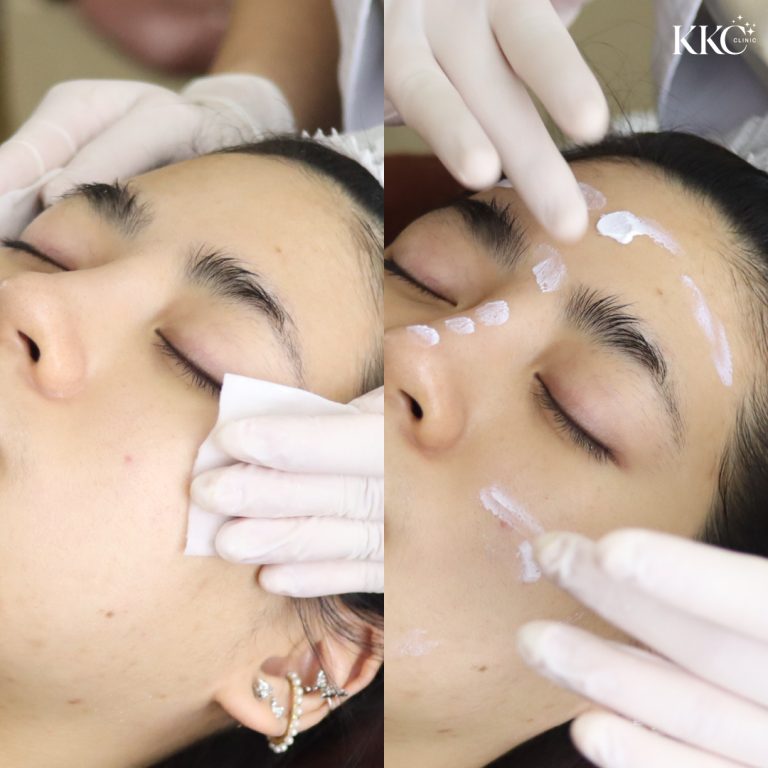
Aftercare varies by treatment, but the baseline is the same across all of them:
- SPF 50 or higher daily; avoid direct sun for 2 to 4 weeks after laser
- No exfoliants for 1 to 2 weeks
- Gentle, non-foaming cleanser
- Hydrating moisturizer
Treatment-specific notes:
- CO2 laser: 5 to 7 days of careful management. No makeup for 1 to 2 weeks. Gentle cleansing only. Full instructions provided at the appointment.
- Non-ablative lasers (Dual Yellow, Blink, IPL): little to no downtime; resume normal skincare within 24 hours.
- Subcision: ice the area initially. Expect bruising for 1 to 2 weeks. Oral antibiotics may be prescribed.
- RF microneedling: mild redness for 24 to 72 hours. After treatment, we apply only sterile, intradermal-grade products (like our skin boosters); these can safely penetrate deeper through the micro-channels. Everyday cosmetic serums aren’t formulated for intradermal delivery and have been linked to skin reactions in case reports.
Why Choose KKC Clinic for Acne Scar Treatment?

Acne scar treatment usually runs across multiple sessions and modalities, often over many months. We’re set up for that: dermatologist-led plans, regulated devices, and a free consultation that maps the right combination for your scars.
- Dermatologist-led: every plan designed with a board-certified dermatologist
- Devices registered with the Thai FDA, with internationally cleared underlying technology
- Personalized plans, not one-size-fits-all
- 6 locations across Bangkok
- Award-winning aesthetic clinic (Galderma, Merz, Allergan)
- English-speaking doctors and staff
The energy-based devices we use are registered with the Thai FDA for clinical use in Thailand. The underlying technologies hold US FDA 510(k) clearance or CE marking. This includes fractional CO2, RF microneedling (Sylfirm X Plus, K200185), Dual Yellow copper bromide, and IPL.
Suitability for specific skin types varies by device. RF microneedling is validated across Fitzpatrick I to VI. Ablative CO2 and IPL are used more selectively for darker skin tones, with adjusted settings and a pre-treatment regimen.
Rated 4.9 out of 5 across 2,300+ reviews.
Frequently Asked Questions
Start with a Free Consultation
Ready to take the next step toward smoother skin? Book a free consultation with one of our dermatologists. We’ll examine your scars, identify the mix of types, and design a personalized treatment plan.