
Non-Surgical Facelift Treatments in Bangkok
Firm sagging skin and restore lost volume by treating the support layers beneath.
Rated 4.9 out of 5
2,300+ five-star reviews

What changes with age mostly sits below the skin, in the fat and connective tissue that give the face its shape. As the fat thins and the connective tissue loosens, the face flattens in some places and drifts downward in others.
We offer six non-surgical treatments for sagging and lost volume, and they work at different depths. Ultherapy and HIFU heat the deep layer so it contracts. Thermage FLX firms the skin above it, EMFACE works on the muscle that holds the face up, thread lifts reposition tissue directly, and liquid facelifts replace volume that has gone.
Which of those suits you depends on what has changed in your face. Our doctors work that out at a free consultation.
Who It’s For and How We Assess
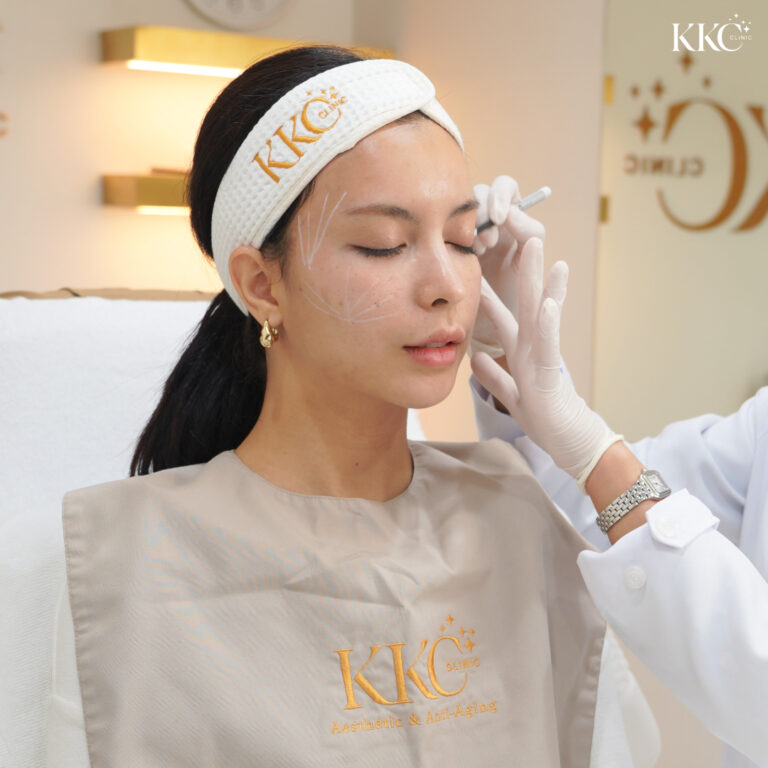
Two things decide which of the six treatments fit: how much laxity you have, and what condition your skin is in. Age is a surprisingly poor guide to either. People of the same age can differ by around six years in how much their faces have aged, and that gap often widens after 40. So we assess your face rather than your birthday.
What we are looking for is depth. The face ages in five layers, from the skin down to the bone, and the layer that has changed is the one worth treating. Your doctor checks:
- the skin: how far it has loosened and where, plus texture, fine lines and elasticity
- the fat: how much volume has gone, and from which areas
- the structure beneath: the shape of the jawline, midface and neck
- your medical and treatment history
Which layers have changed, and by how much, decides the plan. That may mean one treatment, or two combined.
In the video below, Dr. Monthinee “Pom” Techasomboon goes through all five facial layers and why each one needs a different treatment.
Our Non-Surgical Facelift Treatments
You do not have to arrive knowing which of these you need. Most people describe the changes they have noticed in their face. Your doctor starts there, then looks at the whole face to work out what is causing those changes.
Ultherapy
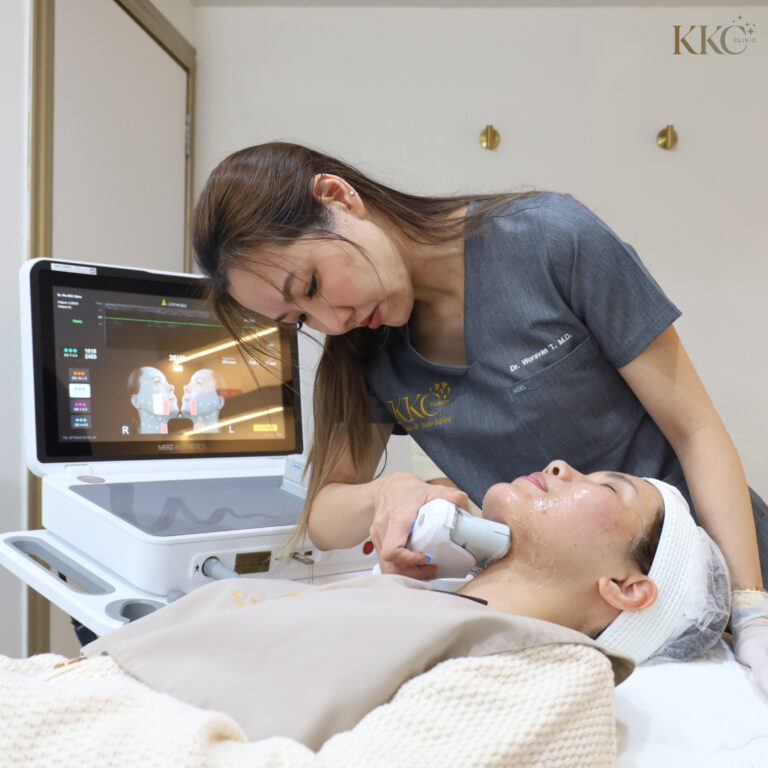
Ultherapy suits early sagging where volume is still largely intact: brow heaviness, a jawline starting to soften, mild neck laxity.
Micro-focused ultrasound reaches the deep support layer and heats it at precise depths, so tissue contracts and rebuilds collagen over the following months. A session takes 30 to 90 minutes with minimal downtime, and the change appears gradually over two to three months. Results typically last 12 to 18 months.
HIFU
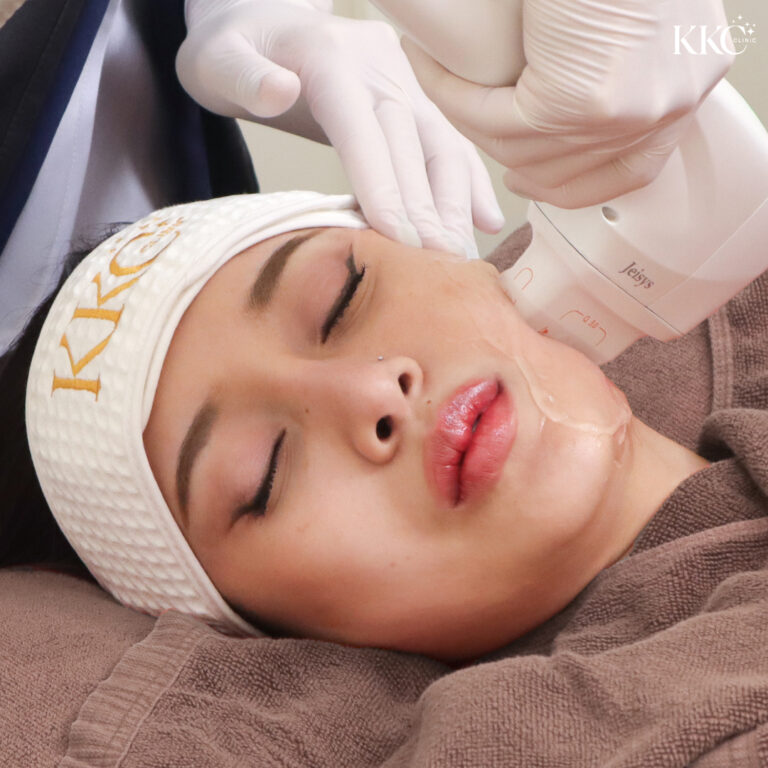
HIFU suits mild to moderate laxity where the whole lower face needs tightening, including under the chin.
Focused ultrasound is delivered in continuous lines rather than in individual points. A session takes 30 to 90 minutes with minimal discomfort and minimal downtime, and the change appears over two to three months. Results typically last 6 to 12 months, depending on your age, skin condition and lifestyle.
Thermage FLX

Thermage FLX suits skin that has lost firmness and texture while the structure underneath is still holding: fine lines, crepey skin, texture changes.
Radiofrequency warms the collagen-rich layer of the skin so it remodels and firms. A session takes 30 to 90 minutes, felt as warmth with cooling between pulses, with minimal downtime. The change appears gradually over two to six months and typically lasts 12 to 24 months.
EMFACE

EMFACE suits a face that has lost lift and tone rather than firmness or volume: cheeks sitting lower than they used to, a heavier brow, a tired look without much actual loose skin.
Synchronized radiofrequency warms the skin while HIFES makes the muscles beneath it contract, so it is the one treatment here working on facial muscle rather than skin or volume. A course is four weekly sessions of 20 to 30 minutes with minimal downtime. To maintain the results, most people have one treatment every six months to a year.
Thread Lift

A thread lift suits descent that has already happened and needs the tissue moved rather than tightened: midface descent, jowls that have dropped, a brow that has come down.
Dissolvable threads are placed along the line of the descent and used to reposition the tissue, and collagen forms along the path they took as they dissolve. A session takes 30 to 60 minutes, with mild swelling or bruising and a few days of avoiding wide mouth movements and pressure on the face. The repositioning is immediate, and most people see it holding for 12 to 24 months.
Liquid Facelift
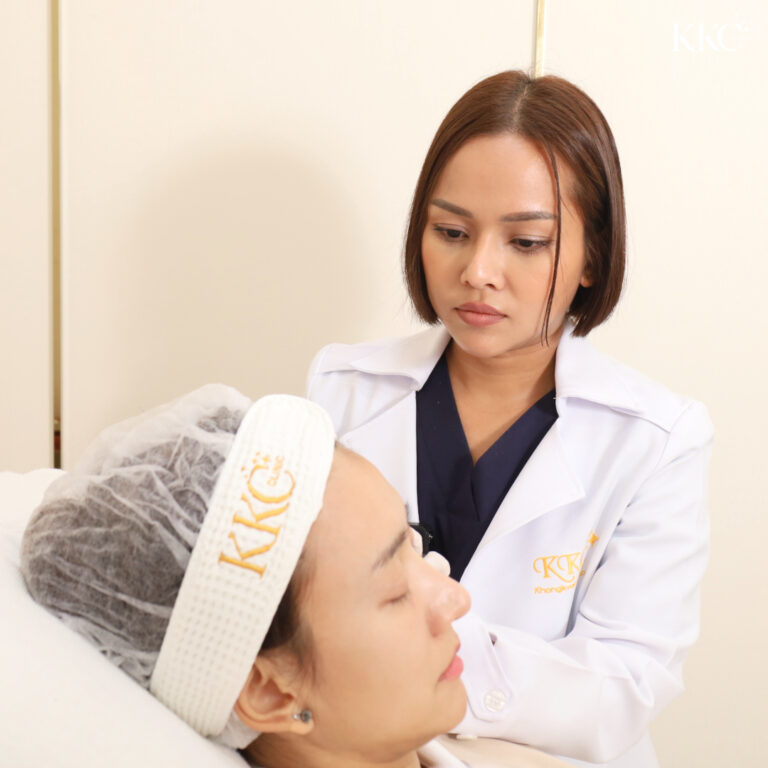
A liquid facelift suits faces that have flattened or hollowed rather than loosened: flat cheeks, hollow temples, a tired or sunken look, lines caused by lost support.
Fillers or biostimulators are placed at structural points in the midface, jawline or temples to rebuild support. Anti-wrinkle injections are sometimes added where muscle movement is deepening a line. A session takes 30 to 60 minutes, with mild swelling or bruising and a week or two for everything to settle. How long it lasts depends on the product: hyaluronic acid fillers typically 6 to 18 months, collagen-stimulating options up to 24 months.
Which Treatment Is Right for You?
Rather than compare all six, it is usually quicker to work back from the change itself.
| What you have noticed | Points to |
|---|---|
| Loss of firmness and texture, with the structure still holding | Thermage FLX |
| Early softening at the brow, jawline or neck | Ultherapy or HIFU |
| A flatter, less lifted face without much loose skin | EMFACE |
| Descent that needs moving rather than tightening | Thread Lift |
| Flattened cheeks or hollow temples | Liquid Facelift |
Combination treatments are common. Tightening the deeper layer and replacing lost volume address different things, so a little of each usually looks better than pushing either one too far.
Treatment Pricing
What you pay depends on how much treatment you need, so a starting price covers the smallest area rather than a whole face. Ultherapy and HIFU are charged per line of ultrasound, Thermage FLX by the number of shots, and the injectables by product and volume.
| Treatment | Starting price |
|---|---|
| Ultherapy | from ฿10,000 |
| HIFU | from ฿15,000 |
| Thermage FLX | from ฿35,000 |
| EMFACE | from ฿30,000 |
| Thread Lift | from ฿10,000 |
| Liquid Facelift | from ฿15,000 |
You get an exact figure at the consultation, before anything is booked.
Why Choose KKC Clinic for a Non-Surgical Facelift

We plan conservatively. We would rather do less and keep your proportions than chase a result that starts to look worked on.
We treat Asian and Western facial structures, and the technique genuinely differs. Where volume sits, how the jawline is built and how skin behaves are not the same across every face.
English-speaking doctors, six branches across Bangkok. Open daily, including weekends.
More than 2,300 five-star reviews on Google.
Frequently Asked Questions
Start with a Free Consultation
Your doctor looks at what has changed in your face, works out what is causing it, and tells you what these treatments will do for you.
You will leave knowing:
- which change is driving what you have noticed
- which treatment, or combination, fits it
- what it will cost
- what to expect, and when